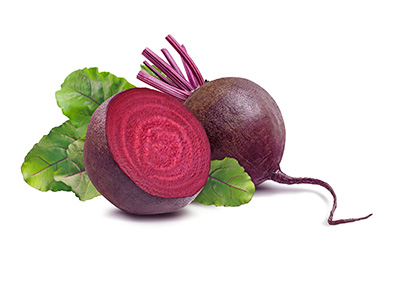
Beet plants (Beta vulgaris) are often grown for their edible taproot, but the beet leaves, or ‘beet greens’, are also consumed. There are several varieties of beet that are of varying shapes and come in different shades of red, yellow or white. Beets are grown worldwide and prefer relatively cool weather, but not severe frosts, for cultivation.
Beet root is an excellent source of dietary nitrate which is transformed in the body to nitrite in the blood, then into the biological messenger molecule, nitric oxide. It is also a rich source of betacyanins; betalain pigments which give red beet root its reddish-purple color. Beet root also contains smaller amounts of phenolic compounds such as flavonoids, phenolic acids and phenolic amides. It is also rich in carbohydrates, a good source of folate, manganese, potassium, magnesium, phosphorus, calcium, iron, sodium, copper, vitamin C, B-complex vitamins, amino acids and dietary fibers, both soluble and insoluble.*